
The Real Future of AI in Marketing
After 16 years building and running digital agencies, I've watched countless technology waves crash over the marketing industry. Most promised revolutionary change but delivered incremental improvements at best. AI feels different, but not for the reasons most people think.

The real future of AI in marketing isn't about replacing human creativity or automating everything. It's about eliminating the drudgery that prevents talented marketers from doing their best work. And in 2026, we're finally at the point where this is actually happening.
Beyond the Hype: What's Actually Working
Let me be blunt: most of what you read about AI in marketing is works of fiction. It's either theoretical nonsense from consultants who've never implemented anything, or cherry-picked case studies that ignore the messy reality of deployment.
Here's what I'm actually seeing work in practice. The biggest brands Shopify, Airbnb, Revolut aren't using AI to write their brand manifestos or create their core creative concepts. They're using it to solve the data processing problems that have plagued marketing teams for decades.
In my experience deploying AI systems for agencies and brands, three areas consistently deliver measurable results:
Before AI, competitor analysis meant assigning a junior team member to manually check rival websites and social accounts. It happened sporadically, if at all. Now I'm building systems that continuously monitor competitor activity, pricing changes, and content strategies. The data gets processed, analysed, and delivered as actionable insights without human intervention.
One client was spending £3,000 monthly on a social listening tool that required hours of manual analysis to extract useful insights. We replaced it with a custom AI workflow using Gumloop that processes social mentions, reviews, and comments across platforms, automatically categorising sentiment and flagging significant shifts. The system pays for itself within weeks.
This isn't about AI writing your content it's about AI doing the keyword research, competitive content mapping, and gap analysis that informs your content strategy. The creative work remains human, but the foundational research that used to take days now happens in hours.
The Death of Drudgery
This is where the real opportunity lies. Marketing teams are drowning in data processing tasks that add no creative value but consume enormous amounts of time. AI excels at exactly these kinds of repetitive, pattern-recognition challenges.
I recently worked with an agency that was spending 15 hours weekly creating client reporting dashboards. We built an AI system that pulls data from Google Analytics, social platforms, and their CRM, then generates client-ready reports with key insights highlighted. That's 15 hours weekly returned to strategic work.
The pattern repeats across every marketing function. Email list segmentation based on behaviour patterns. Social media performance analysis across multiple accounts. Lead scoring based on engagement data. These aren't creative tasks they're data processing tasks that humans do poorly and slowly.
Traditional marketing automation follows simple rules: if someone downloads a whitepaper, send them email sequence A. If they visit the pricing page, trigger sequence B. It's basic logic that treats all prospects identically.
AI-powered marketing automation learns from patterns across your entire customer database. It can predict which prospects are most likely to convert based on their behaviour patterns, not just their actions. More importantly, it can identify the optimal timing, channel, and message for each individual prospect.
Instead of sending the same email sequence to everyone, the system customises timing and content based on each prospect's predicted preferences. Early results show 60% higher conversion rates compared to their previous rule-based system.
The key insight: AI doesn't replace human decision-making in marketing automation it provides better data for those decisions. The system flags high-probability prospects for human follow-up rather than trying to close deals autonomously.
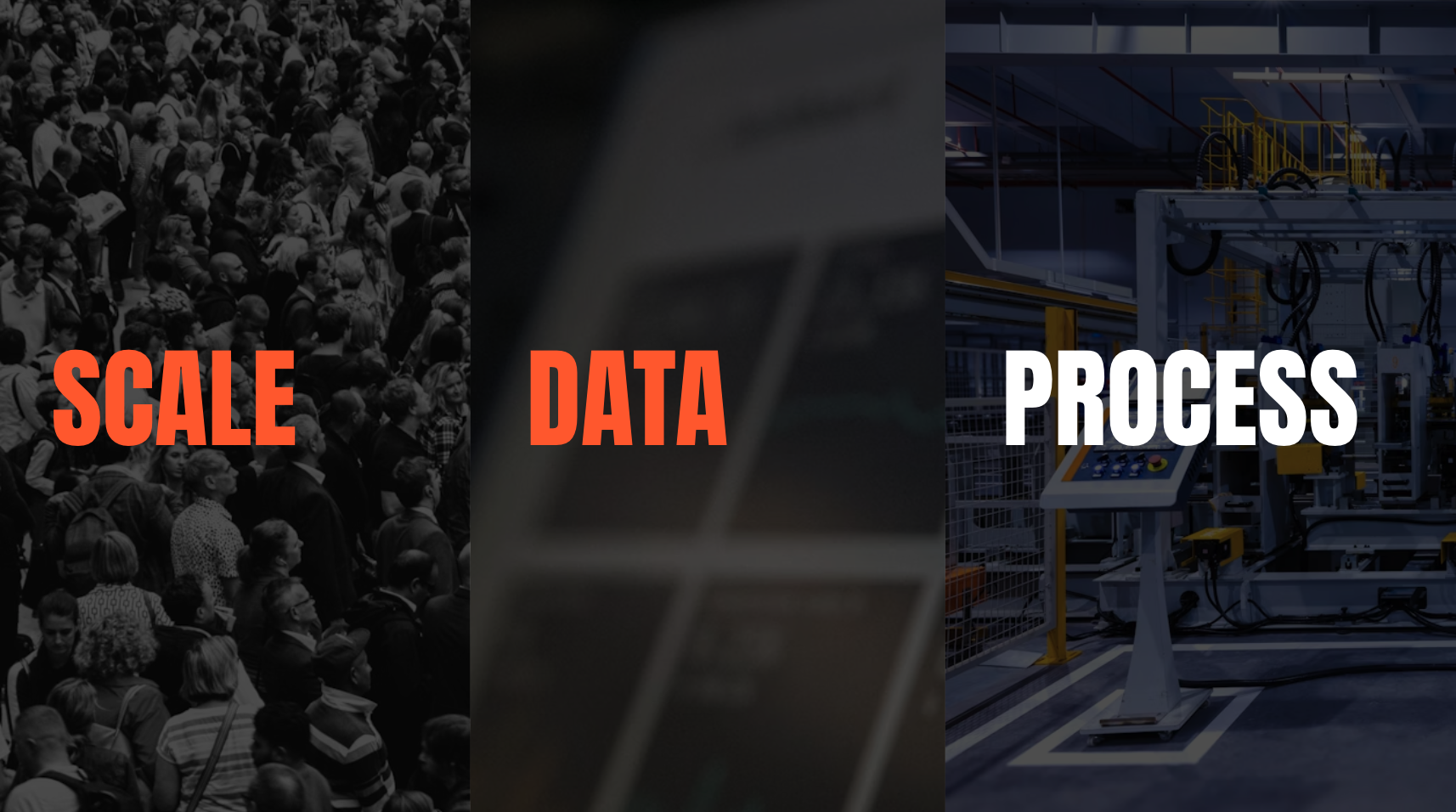
Key reasons to deploy AI
What Doesn't Work (And Why Everyone Gets This Wrong)
Most AI marketing implementations fail because they target the wrong problems. I see agencies trying to use AI for brand strategy, creative concepting, or customer relationship building. These are fundamentally human activities that require empathy, cultural understanding, and creative intuition.
AI writing tools produce content that's technically correct but lacks personality and insight. AI-generated creative concepts feel generic because they optimise for patterns in existing data rather than breakthrough thinking. AI customer service often frustrates customers because it can't handle the emotional nuance of problem-solving.
The companies succeeding with AI in marketing understand this distinction. They use AI to process information and identify patterns, then apply human judgment to act on those insights.
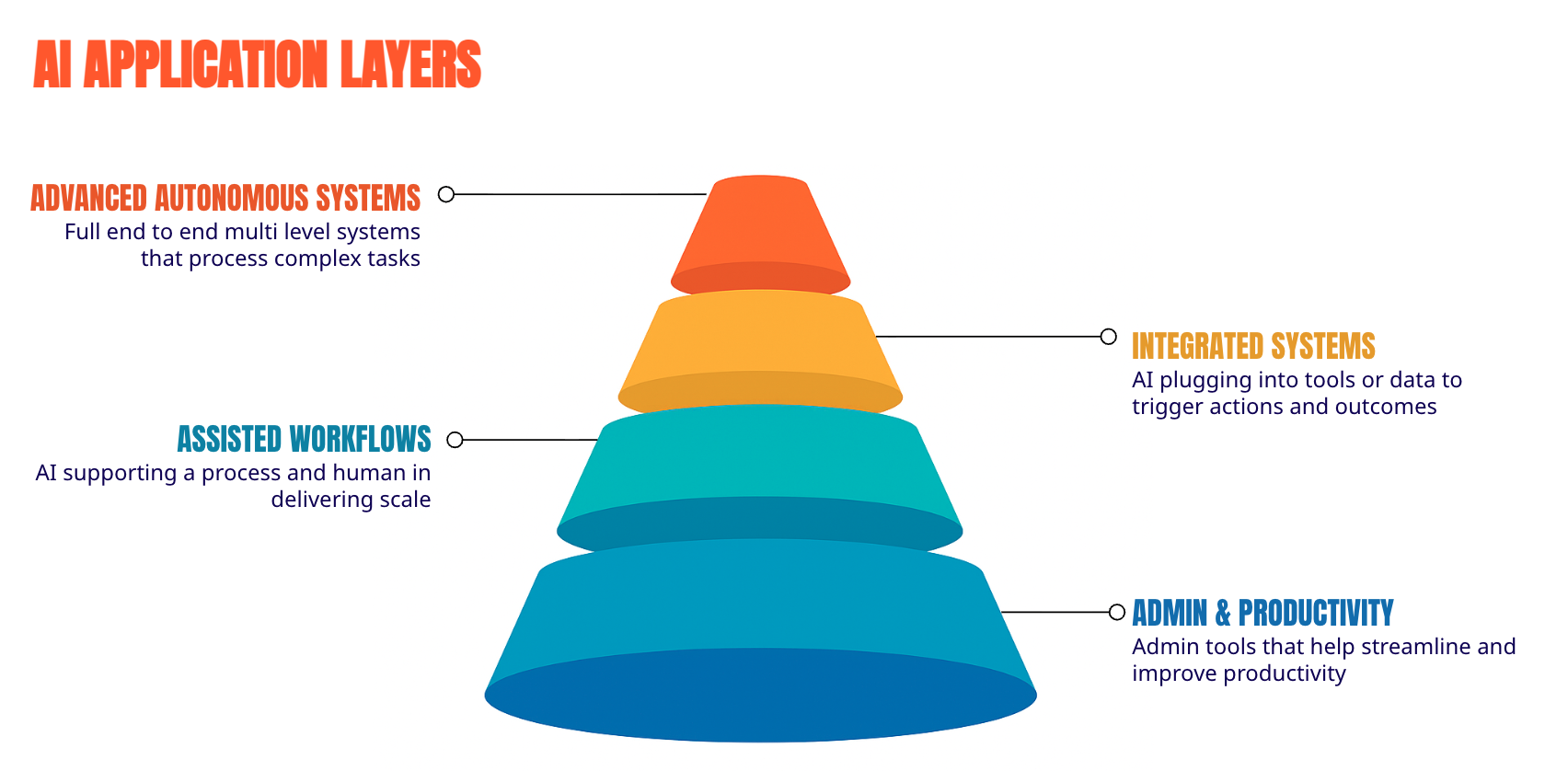
AI Application Layers
Implementation Reality Check
Here's what actually happens when you deploy AI in marketing operations:
Teams realise that systems don't integrate smoothly. Data quality issues surface. Team members adjust to the tools and technology. Users begin to be excited and see the potential
After some teething if the systems is built properly, tasks that consumed hours happen automatically. Data that was previously scattered across platforms gets unified and analysed. Patterns that were invisible become obvious. Users identify more opportunities to improve this further
The team build it into core task and couldn't do it without it. Strategic time is unlocked and they realise that the AI unlocks time for them to do better work.
The Competitive Advantage Window
We're currently in a narrow window where AI implementation provides genuine competitive advantage. Early adopters are seeing significant efficiency gains while their competitors remain stuck in manual processes.
This window won't last. Within two years, AI-powered marketing operations will be table stakes rather than differentiators. The agencies and brands moving now will establish operational advantages that become difficult for competitors to match.
I'm seeing this in client results already. Agencies using AI for competitive intelligence and content research are winning pitches because they can demonstrate deeper market understanding. Brands using AI for customer behaviour analysis are optimising campaigns faster than competitors can react.
What's Coming Next
The next phase of AI in marketing will focus on real-time optimisation. Instead of analysing campaign performance weekly or monthly, AI systems will continuously adjust targeting, messaging, and budget allocation based on live performance data.
We're also moving toward AI systems that can identify entirely new market opportunities by analysing patterns across multiple data sources. Imagine AI that spots emerging customer segments before they're obvious to human analysts, or identifies product positioning opportunities by analysing competitor weaknesses and customer sentiment simultaneously.
But the fundamental principle remains: AI handles data processing and pattern recognition so humans can focus on strategy, creativity, and relationship building.
TAKEAWAYS
The real future of AI in marketing isn't about replacement it's about enhancement. AI won't make marketing decisions for you, but it will provide better data for those decisions faster than any human team could manage.
If you're not experimenting with AI for data processing tasks, you're already behind. Start with one specific problem, build a working solution, measure the results, then expand from there.
The future belongs to marketing teams that understand this distinction and implement accordingly. The question isn't whether AI will transform marketing—it's whether you'll lead that transformation or be forced to catch up later.
Ready to implement AI that actually works?
Stop reading about AI and start building with it. Identify your most time-consuming data processing task and let's build a solution that delivers measurable results, not just impressive demos.