

Every meeting ends with the admin already handled.
Case studyTeam Agent Assistants
We built a set of Claude-managed agents for a communications agency, who isn’t named, covering sales, reporting and client management. The client management agent reads meeting transcripts, updates the project board and drafts the client recap for a person to approve. Together the agents now handle 95% of the tasks the team used to do by hand and save each person more than 40 hours of admin a month, and the sales agent has lifted response rates by 22%.
- Client
- A communications agency, not named
- Category
- Operations
- Agents
- Sales, reporting and client management
- Stack
- Claude, Google Meet, Trello, Gmail
- Time to value
- 6 weeks, build and integration
- Status
- Live
- Updated
Results
Measured since the agents went live.
| Metric | Before | After | Measured over | How measured |
|---|---|---|---|---|
| Previously manual tasks handled | All by hand | 95% covered by the agents | Since go-live | Share of the team’s previously manual tasks the agents now cover. |
| Admin time per person | Before the agents | 40+ hours a month saved | Since go-live | Reported by the team. |
| Sales response rate | Before the sales agent | +22% | Since go-live | Responses to the sales agent’s outreach, compared with before. |
See it in action
The agent reads a meeting transcript, reconciles the tasks and drafts the client follow-up, hands-off.
| Action from the call | Trello |
|---|---|
| Send the revised media plan | Card updated |
| Book the creative review for Thursday | Card created |
| Share the Q3 performance report | Already on the board |
Thanks for the time this morning. Three things from our side: the revised media plan by Wednesday, the creative review on Thursday, and…
What it does
A Claude-managed agent that runs the gap between meetings and execution. Every transcript turns into the right tasks in your PM tool and, when it is a client call, a follow-up email already drafted in your voice.
Reads every transcript
Monitors Google Meet transcripts. The moment a meeting ends, the agent picks it up.
Knows internal from client
The first decision in the workflow. Internal calls route to task creation. Client calls also get a follow-up email.
Reconciles with Trello
Checks Trello before creating anything. Updates existing cards and adds only what is new. No duplicate noise on the board.
Drafts in your voice
Follow-up emails in your team’s tone, recap and next steps included, waiting in your Drafts folder.
The workflow
Six stages, from the end of the meeting to a sent follow-up.
-
Transcript captured
Meeting ends, agent picks it up.
What happens at this step
- Inputs
- A meeting recorded on Google Meet.
- Outputs
- A Google Meet transcript queued for analysis.
- Time
- Length of the meeting.
Every meeting on Google Meet finishes with a transcript dropped into Drive. The agent monitors for new transcripts and picks each one up the moment it appears, without anyone having to trigger it. The workflow runs in the background while your team moves on.
-
Agent analyses the transcript
Internal or client, actions extracted.
What happens at this step
- Inputs
- Raw meeting transcript.
- Outputs
- Classified meeting type and a structured list of action items.
- Time
- Under 30 seconds.
The Claude-managed agent reads the transcript end to end. First decision: was this an internal team call or a client call? That classification routes the rest of the workflow. From there it extracts every action item, decision, owner and date discussed.
-
Task reconciliation
Checks Trello for existing cards.
What happens at this step
- Inputs
- Extracted actions and the current state of the Trello board.
- Outputs
- A diff of new, updated and duplicate tasks.
- Time
- Under 30 seconds.
Before creating anything, the agent queries Trello for existing cards related to what was discussed. It separates brand-new asks, updates to in-flight work and duplicates of cards already on someone’s plate. No noise added to the board.
-
Tasks created and updated
Live on your board via the API.
What happens at this step
- Inputs
- Task diff from the reconciliation step.
- Outputs
- Live cards in Trello, ready to action.
- Time
- Under 30 seconds.
New cards are created in Trello with owners, context, a source link back to the call, and the right list. Existing cards are updated with new information or status changes, all through the Trello API. By the time you are back at your desk, the board reflects what was just decided.
-
Follow-up drafted
Client calls only, lands in Drafts.
What happens at this step
- Inputs
- Classified client transcript and your tone-of-voice profile.
- Outputs
- A draft email in your inbox, ready to review.
- Time
- Under 30 seconds.
If the meeting was client-facing, the agent drafts a follow-up email in your team’s tone of voice. It recaps key points, confirms next steps and references anything promised on the call, then lands in your Drafts folder for the human pass.
-
Review and send
You check, tweak, hit send.
What happens at this step
- Inputs
- The drafted email and your judgement.
- Outputs
- A sent follow-up and a closed admin cycle.
- Time
- 1 to 2 minutes.
You open the draft, glance over it, add the personal touches only you can add, and hit send. Tasks are already live and the board is already current. The client has their recap within minutes of the call ending, not days.
The problem
Meetings end with clear actions. Two hours later, half of them have evaporated, and the follow-up email is still in someone’s head, not in the client’s inbox.
The team had two leaks they couldn’t plug. The first was on calls. Meetings would end with clear action items, and some of them would never make it into the PM tool. By the time someone remembered, the context was gone and the deadline was already a problem.
The second leak was in inboxes. Client follow-ups were taking a day or two to go out. The habit of sending the recap within an hour had quietly collapsed under everything else.
The team’s best people were spending their mornings on admin, which isn’t why they were hired.
- Action items regularly never reached the PM tool.
- Hours each week, per person, lost to triage, reporting and follow-up drafting.
- Inconsistent follow-up: some clients chased twice, others not at all.
- No clean handoffs between sales and delivery when a deal closed.
The solution
A project management and admin agent that runs the gap between calls and execution. It reads transcripts, reconciles tasks, drafts emails and hands you ready-to-ship work.
One agent, two tracks, no admin tax
The Team Agent monitors your transcription tool for new meetings. Each transcript is read end to end, classified as internal or client, and run through a workflow that reconciles the discussed actions against your live PM tool. Tasks are created or updated through the API. If the meeting was client-facing, a follow-up email is drafted in your tone of voice and dropped into your Drafts folder, ready for the human pass.
- Transcript listeningPicks up new transcripts from Google Meet the moment a meeting ends.
- Meeting classificationInternal team call or client-facing? The first decision drives the rest of the workflow.
- PM tool reconciliationCross-checks discussed actions against existing tasks. No duplicates, no noise.
- Follow-up draftingClient recaps in your voice, with next steps, waiting in Drafts when you open your inbox.
Pick a role. We’ll build the agent.
Sales, ops, exec, support. Tell us where the admin pain lives.
Scope an agentThe outcome
The agents now handle 95% of the tasks the team used to do by hand. Each person gets back more than 40 hours a month, and the sales agent has lifted response rates by 22%.
- 95%Of manual tasks handledCovered by the sales, reporting and client management agents.
- 40+hrsAdmin saved per personEvery month, since go-live.
- +22%Sales response rateResponses to the sales agent’s outreach, compared with before.
Questions
What do the agents do?
There are agents for sales, reporting and client management. The client management agent reads meeting transcripts, updates tasks in Trello and drafts the client recap in Gmail for a person to approve.
How much time do they save?
More than 40 hours of admin per person, per month.
What does 95% mean?
95% of the tasks the team used to do by hand are now covered by the agents.
How long did it take to build?
Six weeks, including integration with the team’s tools.
More case studies
All our work-
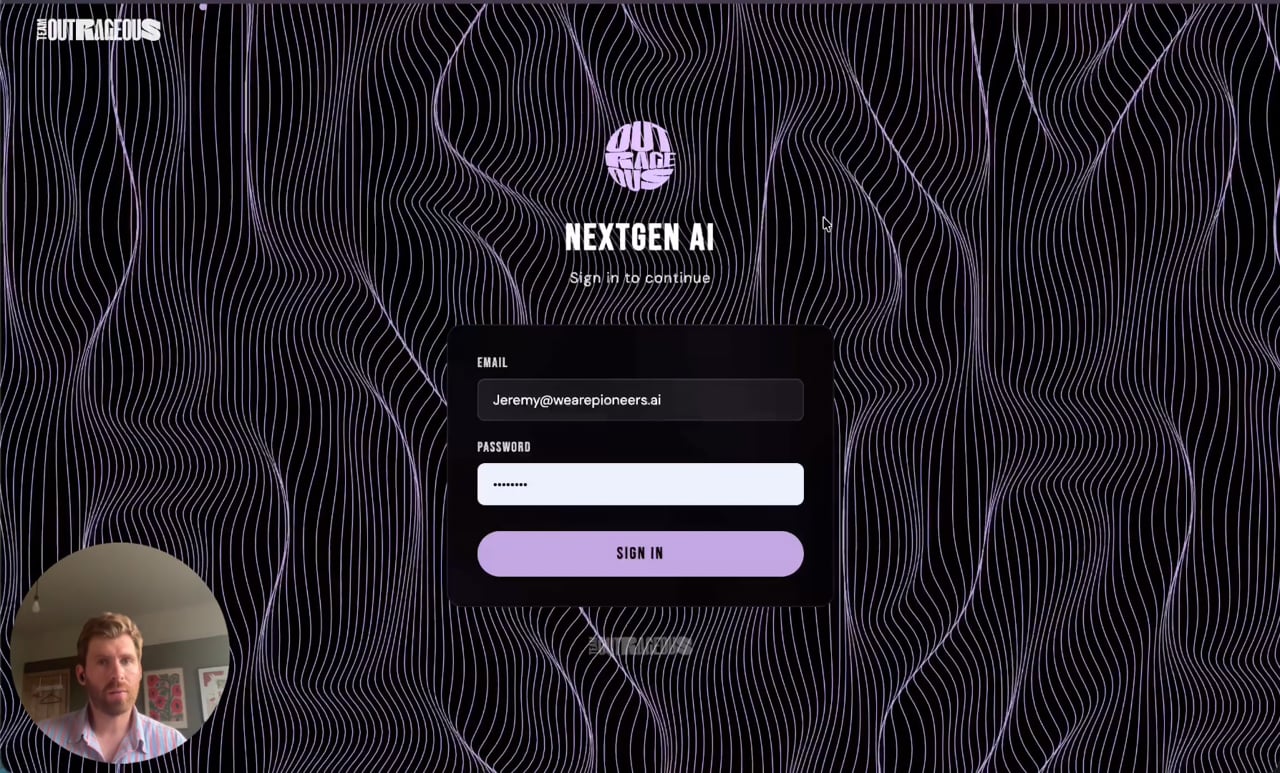
Next Gen Intelligence: raw signal to brief-ready concepts
Case studyIntelligenceVideo 2:40
60,000 qualitative documents turned into trends, platforms, personas and cited creative concepts.
-
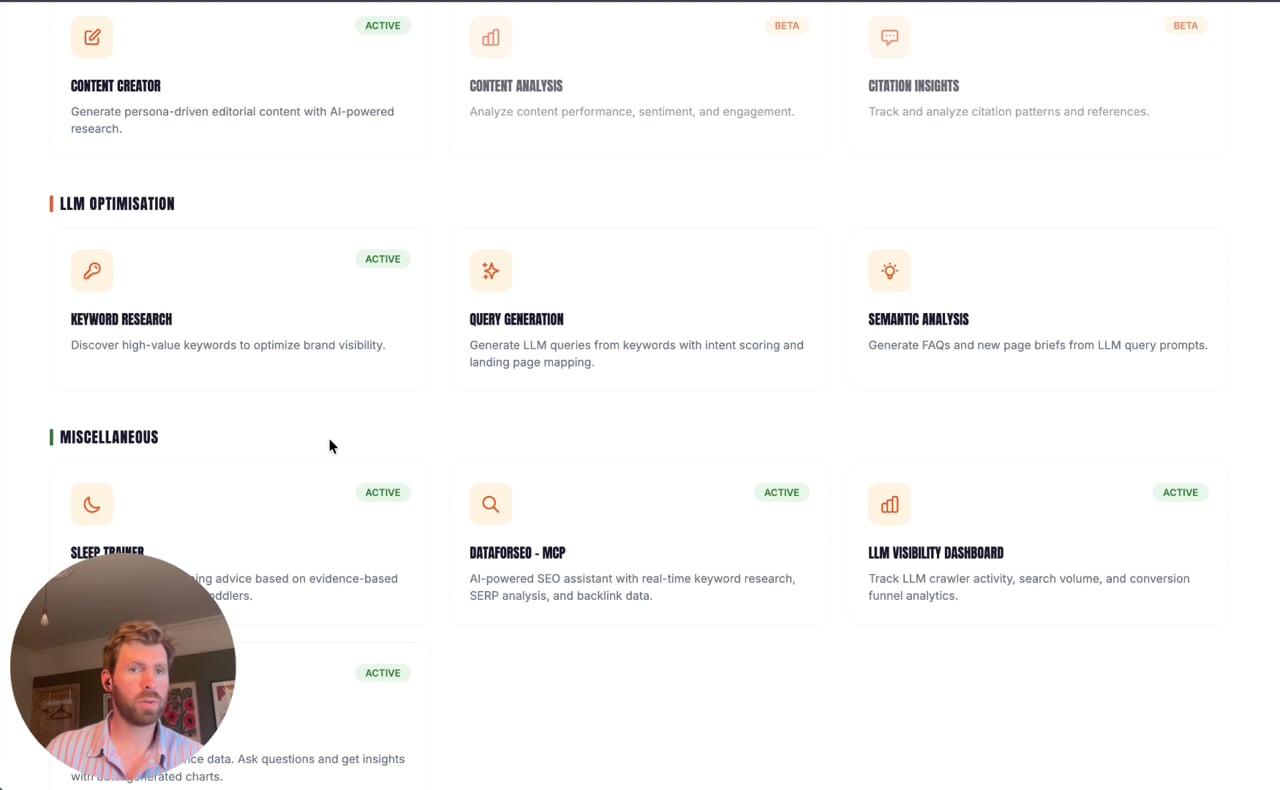
Three days of LLM SEO, in one hour
Case studyWorkflowsVideo 3:10
Keyword research, query generation and a semantic audit, chained into one automated run.
-
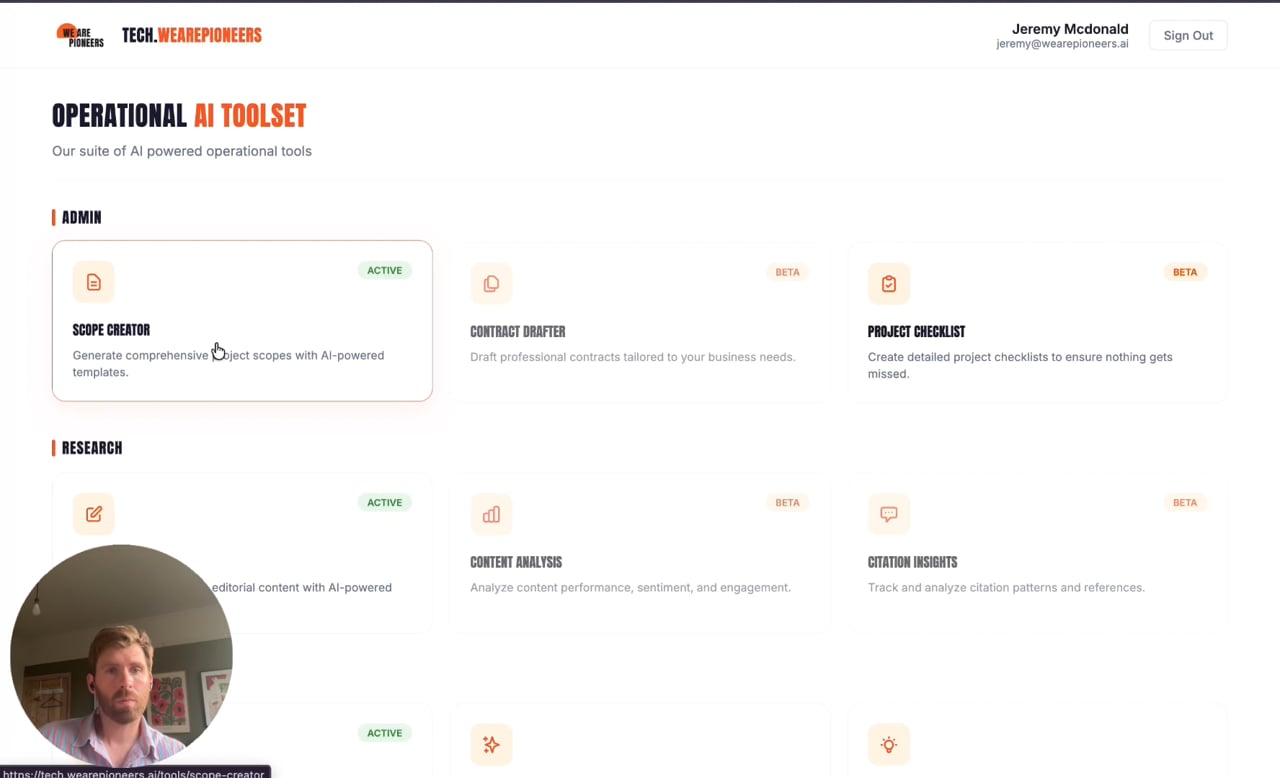
Scope Assistant: a scope in two minutes
Case studyOperationsVideo 1:26
Reads a client call, runs a 22-prompt framework and lands a formatted scope in Drive.
Give your team a quiet co-worker
Tell us where the admin tax is heaviest in your team’s week. We will come back with the agent that takes it off the table.